
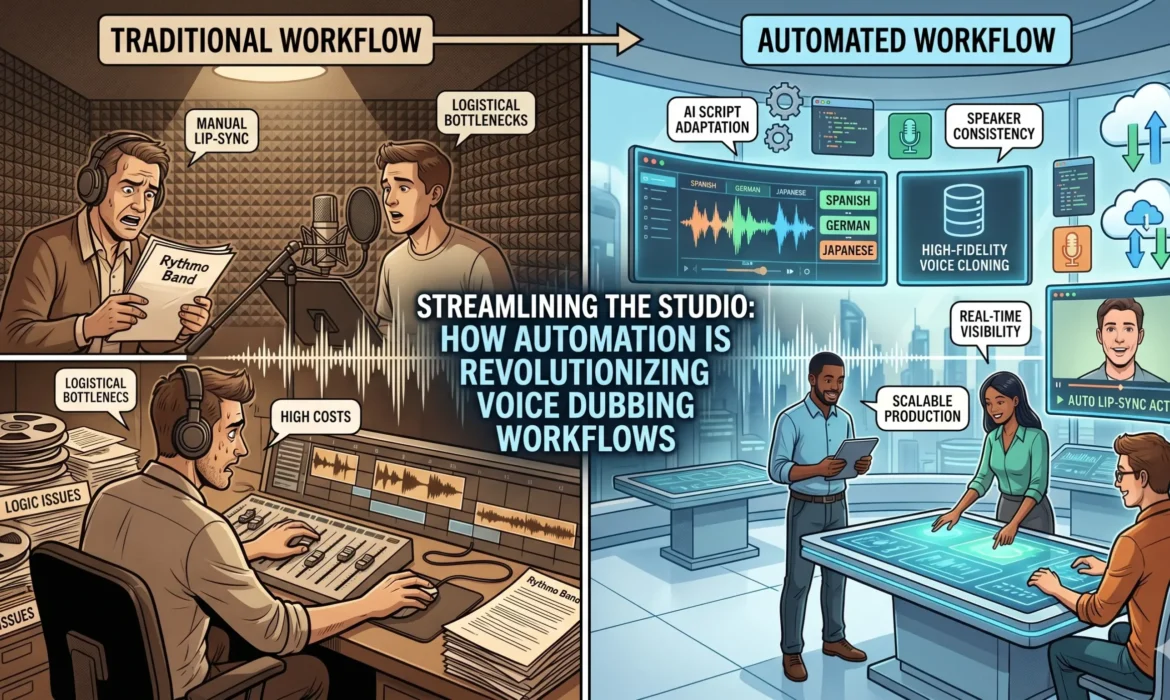
The global demand for localized video content has reached an all-time high. Whether it is an international streaming series, an e-learning module, or a corporate training video, content creators face immense pressure to translate and dub audio quickly without sacrificing the emotional nuance of the original performance.
Traditionally, the voice dubbing pipeline is a complex, fragmented web of manual tasks involving script translators, voice talent, directors, and sound engineers. However, custom software and industry-specific automation are fundamentally shifting how studios manage this chaos, turning a slow, error-prone workflow into an agile production line.
1. Smart Script Adaptation and Lip-Syncing
One of the most tedious phases of dubbing is adjusting translated text so it matches the original speaker’s lip movements and timing windows. Custom dubbing software utilizes precise time-stamping algorithms that analyze the original audio track and provide translators with strict character counts and timing boundaries.
Instead of manual guesswork and endless retakes in the studio booth, adapters receive instant feedback on whether a translated phrase is too long or short for the visual scene. This drastically reduces recording time and engineering overhead.
2. Digital Auditioning and Talent Matching
Managing global voice talent pools via spreadsheets and scattered email attachments is highly inefficient. Integrated production portals allow studio managers to search localized databases using granular tags—such as language, dialect, age range, vocal tone, and acting style.
Audition scripts can be distributed securely, recorded remotely by the talent, and submitted directly back through a client portal. This eliminates administrative friction and cuts weeks off the casting process for large, multilingual projects.
3. Automated Asset Management and File Naming
A single 30-minute television episode can yield hundreds of individual audio segments, retakes, and ambient noise tracks. Manually naming, organizing, and saving these files creates a massive risk of human error or accidental data overwrites.
Dedicated media production software automates this entire pipeline behind the scenes. It automatically names files based on the project ID, character, scene, and take number, while instantly syncing recorded audio tracks back to the master video timeline. Assets are backed up to secure cloud storage in real-time, protecting weeks of creative work.
4. Seamless Remote Direction
The modern entertainment landscape requires collaboration across different time zones. The director, the client, and the voice actor are rarely in the same physical room. Custom dubbing platforms solve this by offering low-latency, real-time video and audio streaming solutions.
Directors can trigger visual cues, overlay translated scripts on the actor’s screen remotely, and mark accepted takes directly into the production timeline from anywhere in the world. This ensures high-quality production values without the travel costs.
The Big Picture: Industry-specific automation isn’t about replacing human creativity; it’s about removing the administrative friction that bogs it down. By handing over data entry, file organization, and time-matching to intelligent software, studios allow their creative teams to focus entirely on delivering a stellar performance.

